Alypius R Us
Phil Klay, Erich Auerbach, Saul of Tarsus

I
I think Phil Klay is one of the very best writers alive today. I loved his Redeployment, the collection of war stories from 2014—seems a lot of people did, it won a National Book Award—but I wasn’t sure why I felt so strongly until Friday, after reading his op-ed in the New York Times.
It boils down, I think, to my admiration for the social ethic he wants from writing—that is, from his readers, the people he situates in the fictional worlds he conjures, where they can ask themselves what moral choices they would have made under such circumstances, and the people who encountered him on Friday, as an auditor of their motives in real time. He demands something from them, from us, and that is what alcoholics know as a moral inventory.
It’s an unusual demand to make of readers in these times. Redemption hasn’t described the narrative arc of fiction since the 1960s, when the sense of an ending seized the American imagination and the retrospective attitude of elegy—the feeling of “after the fact”—began to color most writing, non-fiction included. At that moment, the justification of past suffering, which becomes at least possible at the moment comedy supersedes tragedy and unspeakable loss becomes noble sacrifice, began to feel naive, parochial, immature. But irony absent a comedic form or sensibility reduces, eventually, to the resignation—the happy stupidity—of the spectator or the sports fan: “So it goes.”
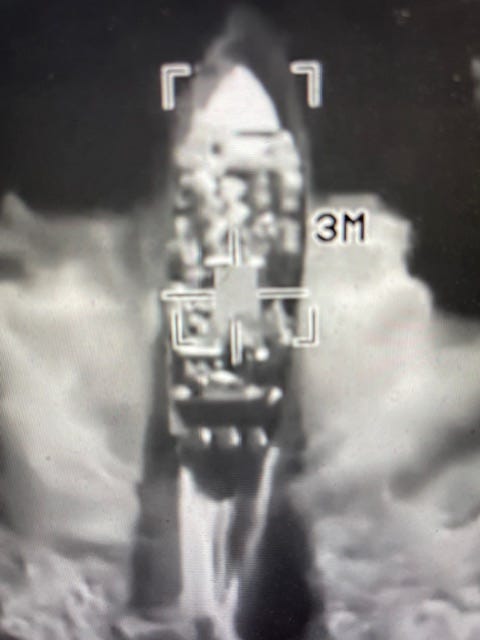
Klay is not having it. He knows better, and he wants us to be better than that. Consider Friday’s op-ed, on the gory spectacle of drone strikes that obliterate people who are neither armed combatants nor convicted criminals in flight from the law:
“The president inhabits a position of moral leadership. When the president and his officials sell their policies, they’re selling a version of what it means to be an American—what should evoke our love and our hate, our disgust and our delight. If all governments rest on opinion, as James Madison thought, then it is this moral shaping of the electorate that gives the president his freedom of action, and that we will still have to reckon with once he is gone. . . .
“For a nation devoted to the lust for domination, a president needs to foster a citizenry that thrills in displays of dominance and cruelty. Hence this administration’s braggadocio about death, its officials’ memes about suffering, their promises to inflict pain on America’s enemies followed by scant rationales for their own policies. . . .
“But we must still ask ourselves a fundamental, private question that, at scale, has broad political implications: Given that we are all, every day, imbibing madness, how do we guard our souls?”
II
Klay invokes Augustine the Church Father to answer that disturbing question, at the moment in The Confessions where he tells the story of his studious, Stoic friend, Alypius, the young man who refused to attend the gladiatorial games in the Colosseum of 4th century Rome because they were unfit for civilized men—but who one day relented, and was quickly swept up in the spectacle, becoming what we would now call a huge fan of the original bloodsport.
“The Trump administration’s celebration of death brings us far from discussions of the law of armed conflict, the constitutionality of the strikes or even the Christian morality that would eventually push Augustine to formulate an early version of just-war theory. We’re in the Colosseum, one brought to us digitally so that we need not leave our homes to hear the cheers of the crowd, to watch the killing done for our entertainment and suffer the same harm that injured Alypius more than 1,600 years ago.”
The harm that injured Alypius the spectator? “He saw the blood, and he drank in savagery. Riveted, ‘he imbibed madness.’ Soon, Augustine said, he became ‘a fit companion for those who had brought him.’” '
Klay leaves it at that, with the idea that we are the allegorical equivalent of Alypius— that watching video of war crimes in the Caribbean makes Americans fit companions of Donald Trump, Stephen Miller, Pete Hegseth & Co, whose moral standards have yet to be defined, let alone deciphered. He may be right. The so-called norms these officials have broken with impunity finally leave them with no obligations except to their own self-aggrandizement at the expense of all others. The Athenians coined their motto at Melos in 416 BC: “And the weak suffer what they must.”
III
Erich Auerbach won’t leave it at that, even though he wrote in exile at a moment in history, the 1940s, that witnessed an even more radical repudiation of basic human decency than Trump personifies—and even though he cites the very same story of Alypius at the games from The Confessions. In “The Arrest of Peter Valvomeres,” Chapter 3 of his great work, Mimesis: The Representstion of Reality in Western Literature (trans. 1953), Auerbach draws a different moral from this story by showing that at the level of Augustine’s sentences, a fresh, realistic, but hopeful voice based on the syntax and rhythm of the Gospels had emerged to challenge the somber, elevated, classical style of ancient historians like Tacitus and Ammianus Marcellinus.
These historians clung to the conventions that allotted different rhetorical registers to the well-born and the lowly—according to these conventions, the technique of realistic imitation was fit only for the comic depiction of servants or slaves—but they described the world of late antiquity with a new sensory awareness and intensity. Augustine refused the conventions by mixing the registers, by depicting the most lowly inhabitants of the Roman Empire as figures worthy of tragic forms and styles. Christ had come not as a king but as a carpenter, after all, and his companions were fishermen, artisans, publicans, and prostitutes.
Ammianus was a former commander of a Roman Legion who wrote his multi-volume history of the empire in the mid-to-late fourth century A.D., as a contemporary of Augustine. Auerbach quotes from volume 15, where Ammianus writes of a Roman mob and the arrest of its ringleader with the distant aplomb of Tacitus, in a proudly stoic manner that contrasts the seething, mindless mass led by Peter Valvomeres against the steely, virtuous resolve of the prefect who accuses him: “‘sitting in his carriage, with an imposing confidence, [Leontius] gazed with piercing eyes into the faces of the packed crowd raging all about like serpents.’”
Auerbach compares this elevated style to The Confessions, where Augustine writes of the same seething mass, but transposes the contest between primal bloodlust and virtuous repose to a conflict within the same man, his friend Alypius, an avowed Stoic who, when finally exposed to the spectacle of the gladiatorial amphitheater, can’t resist: “directly he saw that blood, he therewith imbibed a sort of savageness [madness, in the translation Klay uses].”
As Auerbach then explains in Augustinian rhythms, “And it is not merely a random Alypius whose pride, nay whose inmost being, is thus crushed; it is the entire rational individualistic culture of classical antiquity: Plato and Aristotle, the Stoa and Epicurus. A burning lust has swept them away, in one powerful assault.”
Ammianus, the good soldier, clings to that rational individualistic culture, but his hold on it is slipping fast, because the pitiless gaze of his imperial eyes—the inherited, elevated, classical style—can’t make sense of the ending that is already upon him: with these antiquated narrative formulae in hand, he can describe decadence, deformity, cruelty, idiocy, and treachery in great detail, but he can’t respond to these gruesome circumstances with anything more creative than resignation. That is why Auerbach characterizes this historical moment as a rhetorical crisis:
“From the end of the first century of the Imperial Age something sultry and oppressive appears, a darkening of the atmosphere of life. It is unmistakable in Seneca, and the somber tone of Tacitus’ historical writing has often been noted. But here in Ammianus we find that the process has reached the stage of magical and sensory dehumanization.”
IV
And here in the digital remove of videos depicting the annihilation of strangers and survivors from on high—these, too, look like games—we have reached a similar stage, where magical and sensory dehumanization are now the rhetorical rules. Again, Phil Klay leaves it at that.
Erich Auerbach won’t let us stay there. He finds a principle of hope in Augustine’s way into the world by means of words. It is not quite faith he finds there, the kind of faith that—as Saul of Tarsus explained in a letter to his fellow Hebrews—is “the evidence of things unseen.” For the principle of hope waiting at the level of Augustine’s sentences has a footing, a material foundation, in the social movement we know as primitive Christianity, and in the change of moral climate this movement caused.
Auerbach first reminds us of the verbal trap set by the elevated, classical style:
“Ammianus’ world is very often a caricature of the normal human environment in which we live; very often it is like a bad dream. This is not simply because horrible things happen in it—treason, torture, persecution, denunciations: such things are prevalent in almost all times and places . . . . What makes Amminanus’ world so oppressive is the lack of any sort of counterbalance. . . . Striking only in the sensory, resigned and as it were paralyzed despite its stubborn rhetorical passion, his manner of writing history nowhere displays anything redeeming, nowhere anything that points to a better future, nowhere a figure or an act about which stirs the refreshing atmosphere of a greater freedom, a greater humanity.” [my italics]
The question that clearly follows is, Where were these figures and acts that would justify suffering by redeeming it, by moving, finally, from tragedy to comedy? Was it enough to retell the story of the plain-spoken carpenter nailed to a tree as if it were the most exalted and significant act in the history of human beings? Auerbach answers with a return to Alypius, who, like Augustine himself, eventually converted to Christianity:
“Like Peter in the denial scene (and inversely Paul on his way to Damascus), [Alypius] falls the more deeply the higher he stood before. And, like Peter, he will rise again. . . For in the fight against magical intoxication, Christianity commands other weapons than those of the rational and individualistic ideal of antique culture: it is, after all, itself a movement from the depths of immediate emotion; it can fight the enemy with its own weapons. Its magic is no less a magic than is bloodlust, and it is stronger because it is more ordered, a more human magic, filled with more hope.”
V
And so to the “fundamental, private question” Klay asks—how to guard our souls?—Auerbach answers: We can’t, not on our own, not by clinging to a rational, individualistic culture, pretending that we are removed from the fray and can, at this height, remain spectators at video games staged by a self-appointed Secretary of War. There is no protection from the world, because we are, as human bings, thrown into it, where we will inevitably suffer. But we can justify the suffering by redeeming it, perhaps by building on the movement from the depths of our time that insists on the immediate relevance of the primitive Christian criterion of need: “From each and everyone according to their abilities, to each and everyone according to their needs.”
It is a good question which I cant really answer. One possibility I guess is: the distance between the Romanische Philologie in which he was trained in Marburg and the new criticism that dominated US literary studies in the fifties was just too great. But Edward Said for instance got him.
Thank you. It is great to see Auerbach receive the respectful attention he deserves